
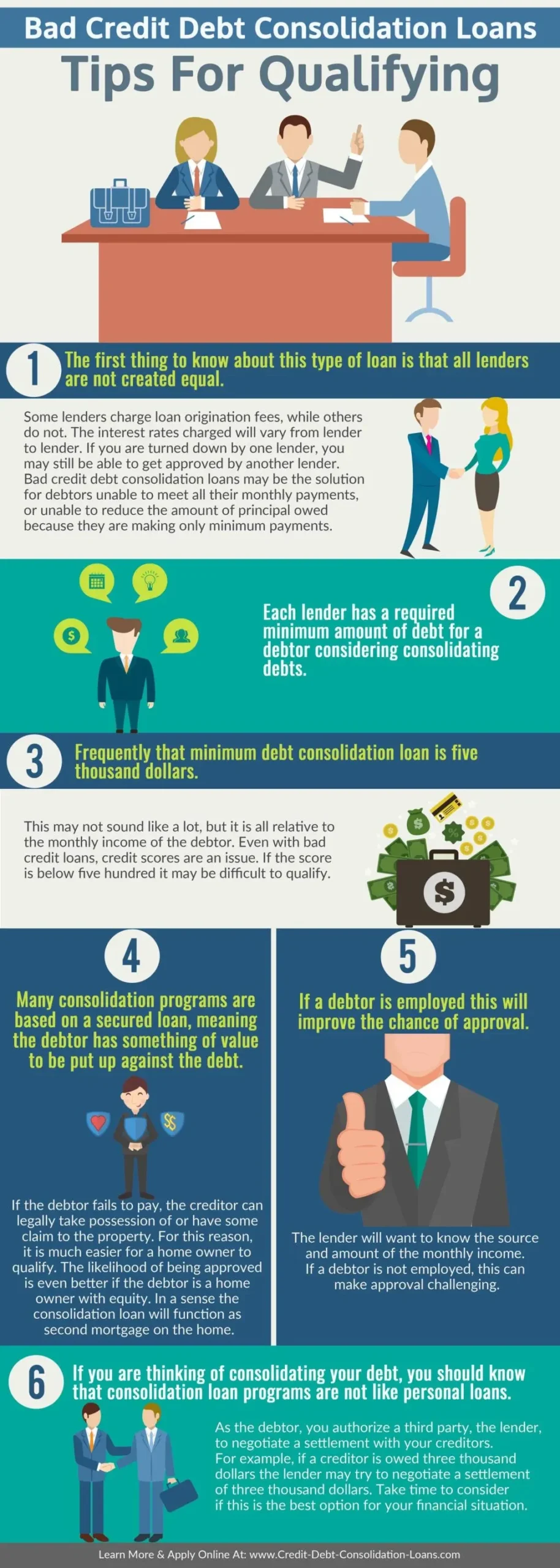
You can get a debt consolidation loan with bad credit, but don’t expect a bargain from a top-tier bank. It’s a simple math trade-off: you’re trading high-interest revolving credit for a fixed installment loan. It might be expensive, but at least the payments are predictable.
If your FICO score has dropped below 580, you’re entering the territory of specialized lending. Traditional banks usually look at a score in that range and politely show you the door. They want low risk, and a sub-580 score is, by definition, high risk. High risk doesn’t mean impossible, though; it just means you’re going to pay for the privilege of borrowing.
Debt consolidation works by taking out one large loan to wipe out several smaller, more expensive debts. Instead of juggling five different due dates and interest rates, you deal with one. It simplifies the mental load of managing money and turns chaotic payments into a predictable monthly schedule. This structure can be a lifesaver if you’re currently drowning in minimum payments that barely touch the principal.
The math has to work, though. If you consolidate a 29% APR credit card into a 22% APR personal loan, you’re winning. If you consolidate a 15% medical bill into a 25% personal loan, you’re just moving the deck chairs on the Titanic. Look at the total cost of the debt over the life of the loan before you sign anything. Moving numbers around isn’t the same as solving a problem.
The Math Behind the Monthly Payment
Before you walk into a bank or click an ad online, you need to understand how these loans work. Most consolidation loans are installment loans. You borrow a lump sum and pay it back in equal chunks over a set period. This is different from a credit card, where the amount you owe fluctuates and interest is calculated daily.
When looking at a debt consolidation loan calculator, you’ll notice the terms usually range from 12 to 84 months. The amount you borrow matters. For example, the lowest interest rates are often reserved for loans of $10,000 or more. If you only need $2,000 to clear a single card, you’re going to pay a premium for that smaller amount.
The math is cold. You have to weigh the monthly payment against your actual take-home pay. A longer term, like 72 months, makes your monthly payment look tiny. That feels great in January, but by next June, you might realize you’ve paid thousands in interest because you stretched that debt out for six years. It’s a trap if you aren’t careful.
Breaking Down the Costs
- APR vs. Interest Rate: The APR includes the interest rate plus any fees you pay to get the loan. This is the number that actually tells you what the debt costs.
- Loan Term: A shorter term saves you money on interest but demands a higher monthly payment.
- Minimums: Most lenders won’t touch anything less than $1,000.
Don’t get distracted by a low monthly payment. That number is a siren song designed to keep you in debt longer. You want to pay the debt off, not live with it for the next decade. It’s a blunt tool. Use it carefully.
The Credit Score Paradox
A common misconception is that taking out a new loan to pay off old debt will immediately tank your credit score. While a new hard inquiry might cause a temporary dip, the long-term effect is often the opposite. You’re shifting “revolving debt” (credit cards) into “installment debt” (personal loans). Credit scoring models tend to view installment debt more favorably because it has a clear end date.
If you’re managing multiple debt consolidation loans in Lexington or anywhere else, how you handle those payments is everything. Because installment loans require consistent, on-time payments, they can actually help build a better credit profile over time. You’re proving to the bureaus that you can handle a structured repayment schedule. It’s a way to rebuild while you pay down the damage.
However, the “bad credit” part remains the biggest hurdle. If your score is hovering around 580, you aren’t going to see the rates offered to “prime” borrowers. You might see rates as low as 10.24% APR for those with stellar credit, but for you, it could be significantly higher. You’re essentially paying a risk premium. Is that premium worth the simplification of your finances? That depends entirely on your discipline.
Is it worth the high interest? Maybe. If the high-interest credit card is at 30% and the consolidation loan is 22%, you’re still coming out ahead. If the gap is smaller than that, you might be better off just paying down the cards manually. Don’t pay for the privilege of being broke. If the math doesn’t favor you, walk away.
Credit scores are fickle. They change with every move you make. One wrong step and you’re back at the bottom.
| Credit Tier | Typical APR Range | Likelihood of Approval |
|---|---|---|
| Excellent (740+) | Low (e.g., 10.24%+) | Very High |
| Good (670-739) | Moderate | High |
| Fair (580-669) | High | Moderate |
| Poor (Below 580) | Very High | Low |
What to Look for in a Lender
Not all loans are equal, and the fine print is where the real stories are. You might need a personal loan for debt consolidation of up to $30,000 to clear your slate. But don’t just look at the top-line interest rate. You need to look at the “exit” terms: what happens when you want to pay the loan off early?
A major red flag is a prepayment penalty. Some lenders make a profit off your desire to be debt-free. If you get a tax refund and want to pay off your loan in month twelve, a prepayment penalty means they charge you for paying them back early. That is predatory. Avoid lenders that charge these fees or late fees that feel punitive rather than corrective. You want a partner in debt destruction, not a landlord of your misfortune.
Check if the lender allows you to pay back the loan without being penalized. Some personal loans offer no prepayment penalties, which is the gold standard. This gives you the flexibility to be aggressive with your payments. If you can’t pay extra toward the principal when you have the cash, you’re stuck in the lender’s slow-motion interest trap.
Questions to Ask Before Signing
Before you sign that digital document, ask these things. If they can’t give you a straight answer, hang up. First, is there an origination fee? This is an upfront fee taken out of the loan amount. If you borrow $5,000 but only get $4,500 because of fees, your effective interest rate is much higher than advertised. Second, what is the total cost of the loan over the full term? Third, can I make extra payments toward the principal at any time?
The “total cost” question is the only one that truly matters. It’s the number that tells you how much of your money is actually going to the bank versus your own pocket. It’s easy to get lost in the monthly minimums. It’s hard to face the total sum of interest over five years. Face it. You need to know the enemy’s full strength before you go to war.
Avoid the temptation to use a “quick fix” lender. The companies that promise “instant approval for everyone” usually have the most aggressive fees and crushing interest rates. They aren’t helping you consolidate; they are helping you cycle. They want you to pay them every month, forever, without ever reaching a zero balance. They aren’t your friends, and they certainly aren’t there to help your credit score. They are just another line item in your debt column.
If you want to actually make progress, you have to change the behavior that caused the debt in the first place. A loan is just a tool. If you use a new tool to keep doing the same old thing, you’ll end up exactly where you started, just with a different name on the bill. Debt consolidation is a way to reorganize your struggle, not a way to escape it. Use the structure to build a foundation for a better score, or don’t bother at all.
Common questions
How badly does debt consolidation hurt credit?
Debt consolidation may cause a temporary dip due to hard inquiries and new account age, but it can improve your score long-term by lowering credit utilization and improving payment history.
What is the current interest rate for a PNC personal loan?
Interest rates for PNC personal loans vary based on your creditworthiness and loan term, typically ranging from a low single-digit percentage to much higher rates for those with bad credit.
What's the worst debt you can have?
High-interest unsecured debt, such as payday loans or credit card balances with APRs exceeding 25%, is considered the most damaging due to the rapid accumulation of interest.
How long does it take to build a credit score from 500 to 700?
Moving from a 500 to a 700 score typically takes 12 to 24 months of consistent, on-time payments and disciplined credit utilization management.
Can I get a debt consolidation loan with bad credit?
Yes, but you will likely face higher interest rates and may need a co-signer or a collateralized loan to qualify for favorable terms.